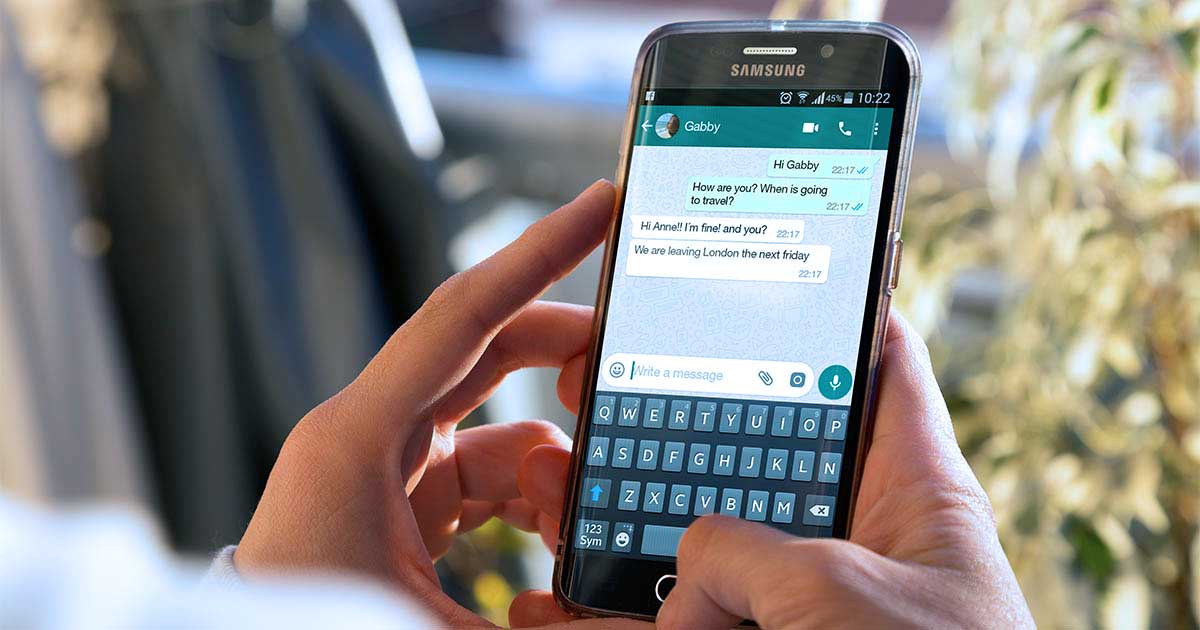
When Elon Musk simply tweeted ‘Use Signal’, he put a megaphone to the global data privacy conversation.
Musk’s tweet was in response to widespread outrage that the Facebook-owned instant messaging app WhatsApp was demanding its 2 billion-plus users consent to sharing their personal information, including their phone number, with Facebook and its subsidiaries or have their accounts deleted. WhatsApp set an initial deadline for user consent of February 8, 2021 but later pushed it to May 15 following widespread backlash.
Since Facebook is in the business of data surveillance it shouldn’t have been a huge surprise when its instant messaging app wanted to change its user terms and privacy policy so it could share user data with its parent company for targeted ad and product experience purposes. In fact, WhatsApp has been sharing user data with Facebook since 2016 and hasn’t stopped, effectively breaking the 2014 promise that both companies made on Facebook’s acquisition of WhatsApp that the two services would remain separate.
Why this latest news of WhatsApp sharing data with Facebook has shocked and riled so many then is that, for some, it was the first time they’d realized it was even happening (despite it going on for four years). Further, many users and some media interpreted the changes to mean that WhatsApp and Facebook would now be able to access the content, including text and photos, of users’ private messages, and spotted that the original opt-out statement giving them the choice to not have their data shared was now missing from the revised privacy policy. Many users rightly or wrongly saw this latest move as yet another Facebook data sweep and a further hit to their increasingly vulnerable privacy. Fair enough. But the story is even bigger than that.
When WhatsApp announced its controversial privacy policy change in early January, consumer tension was already at boiling point over data privacy and Big Tech’s increasing surveillance and use of customer information. So when Elon Musk ‘suggested’ people use private messaging app Signal, its popularity skyrocketed, gaining around 7.5 million downloads in just four days. Similar app Telegram also experienced a massive boost in downloads because of the Musk tweet, and most privacy-focused apps, including MySudo, benefitted too.
Musk flagged Signal to his 42 million followers because it’s a recognized private messaging app, powered by the open source Signal Protocol, whose sole feature is end-to-end encryption of user content. Privacy and encryption are quickly becoming hot property indeed.
This is obviously a big and important story for data privacy. That millions of consumers are so tired and weary of trading their personal information for access to services and would jump ship to a more privacy-focused alternative within hours of Elon Musk suggesting such, speaks volumes about where the world is at in the consumer data conversation. But this is also a big and important story for MySudo and here’s why:
MySudo has more privacy features than Signal, Telegram or any other privacy app on the market today.
Signal and Telegram are private instant messaging apps. MySudo is a complete privacy toolkit. Just as it was before the latest data sharing uproar, MySudo is an excellent alternative for not only in-app messaging but also all out of network comms.
MySudo uniquely offers private and secure voice and video calls, SMS, email, browsing and payments all in one app, and doesn’t require any of your personal information, like your phone number, contacts, or email address, on sign up. So, even if you abandon WhatsApp to use Signal or Telegram for private instant messaging, if you’re serious about your right to data protection and privacy you will need even more privacy features than those apps can give you. MySudo delivers those features.
How does MySudo work?
MySudo is based on the concept of a Sudo, a secure alternative profile or digital identity. You assign your Sudo its own identity data, like a real email, phone number, payment card (and more), and use that data online instead of your own personal and private information. In this way, the Sudo identity shields your personal identity, and protects you from the type of data grabs we’re seeing from Facebook and Google (plus data breaches, fraud and various other forms of data abuse).
Since you can create up to nine different Sudo profiles in the app, it’s possible to use a different Sudo for everything you do online across all your activities (searching, shopping, selling, socializing, etc.). This categorization and separation of your private data across various Sudos is called compartmentalization, the most powerful data privacy strategy there is.
When you download MySudo you get:
- Market-leading privacy and security foundation: MySudo is built on Anonyome Labs’ market-leading cybersecurity and privacy infrastructure. It powers outstanding UX and unprecedented data privacy and security, and features: encryption, authentication, key management, secure communication channels, and decentralized trust. For example, all data stored on our cloud is encrypted. Only you hold the unique encryption key. And all Sudo-to-Sudo messaging, calling, video, and email is end-to-end encrypted.
- No personal information necessary: We don’t ask for your email address or phone number to register for MySudo or other personal information (except for virtual cards when we must do a one-time verification, by law like other financial products). And you can always access MySudo from your mobile app without a login or password.
- End-to-end encrypted voice and video calls with other Sudo users: You can use your Sudo handle for end-to-end encrypted calls and messages with other MySudo users. Or you can subscribe to a plan to add phone numbers to your Sudos. The phone number allows inbound and outbound calls, voicemail, and has a contacts database. You can call anyone from your Sudo number, even if they don’t have a Sudo. But if they do have a Sudo, you get end-to-end encrypted video chat with those users.
- End-to-end encrypted messaging with other Sudo users: You can send standard SMS messages to any phone using MySudo, whether they have a Sudo or not. But if you’re messaging with other Sudo users, you enjoy enhanced messaging with complete end-to-end encryption, plus group messaging, set and send expiring messages, edit and delete message capabilities, and more.
- Secure email: MySudo gives you up to nine email addresses and all emails you send to other MySudo users are completely end-to-end encrypted.
- Ad and tracker free private browsing: Each Sudo has a separate private browser, which means you can keep your browsing history, bookmarks and tabs separated by Sudo (which might be particularly useful if you’re searching from your medical Sudo, for instance). You can open links in emails and text messages on the private browser and, because it’s totally ad and tracker free, you neatly sidestep the spam.
- Private and secure online payments: MySudo virtual cards are designed to powerfully protect online purchases and payments. You can have an active virtual card for every Sudo you create, and they offer a long list of benefits, the biggest of which are that merchants and your bank can’t track your spending habits and you keep your money safer.
- In-built decentralized identity technologies and standards: Last but nowhere near least, the Sudo concept is on a critical path to making decentralized identity usable for most people. Sudos incorporate emerging decentralized identity technologies and standards. Sudos digital identities will become the innovative alternative to traditional identifiers such as email address, password, and phone number for authentication. Sudos are being engineered to be fully interoperable with decentralized identity technologies as they are introduced. MySudo is incorporating decentralized identifiers, peer-to-peer communications, and payments—with more to come.
You can see how MySudo gives you much more privacy than Signal or Telegram. We’re not saying to abandon those services but rather to use MySudo as a companion product. For example, Signal requires your personal phone number to register. You could use a MySudo phone number to sign up for Signal and then get all the extra privacy features of MySudo.
A few final thoughts on Facebook and WhatsApp
WhatsApp has clarified that its privacy policy change includes “new options people will have to message a business on WhatsApp and provides further transparency about how we collect and use data”. It says the changes won’t affect the end-to-end encryption on users’ messages and the content they send and receive—the two providers won’t be able to see user communications. That’s fine, but there’s still a mountain of user information and metadata that WhatsApp can collect and share. For instance, while WhatsApp can’t share the content of your messages, it can tell Facebook who you’re messaging, when and from where. It can also share account information including your personal phone number, information about for how long and how often you use WhatsApp, your device identifiers, IP address, transaction and payment data, and much more. Read this detailed breakdown of everything in a user’s WhatsApp data report from the Indian Express.
As Johns Hopkins University cryptographer Matthew Green is widely quoted as saying: “WhatsApp is great for protecting the privacy of your message content. But it feels like the privacy of everything else you do is up for grabs.”
Photo provided by Alex Ruhl